Clocking In at the Casino: What Australian Gambling Habits Actually Look Like by the Numbers

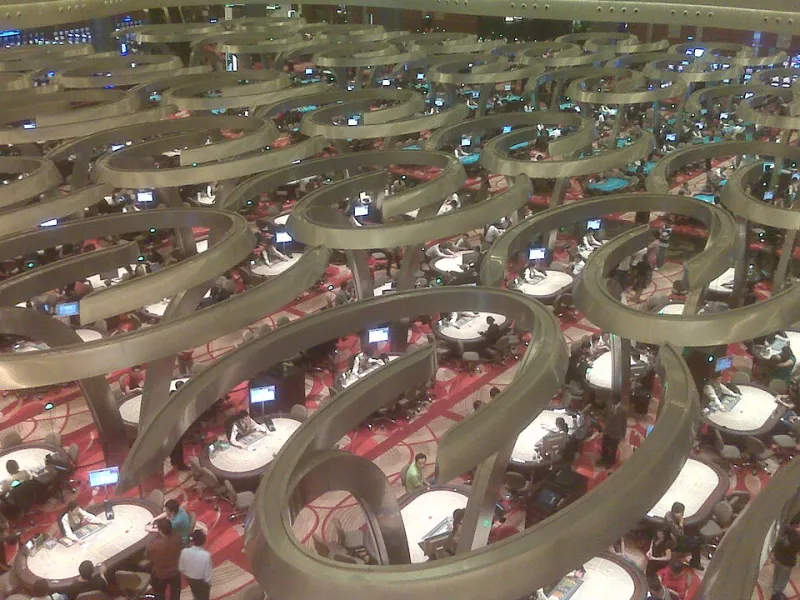
Photo: Dietmar Rabich, CC BY-SA 4.0, via Wikimedia Commons
There's a running joke that Australians will bet on two flies crawling up a wall. While that's a bit of an exaggeration, the underlying truth is hard to argue with — Australians are among the most active recreational gamblers in the world. But beyond the broad strokes, the when and why of Aussie casino activity tells a much more interesting story.
At AU Casiny, we've dug into the behavioural patterns, industry data, and a fair bit of psychology to map out what Australian online casino play actually looks like across the calendar. Spoiler: it's not random.
The Weekly Rhythm: Why Friday and Saturday Are King
If you've ever noticed that online lobbies feel a bit livelier on a Friday evening, you're not imagining it. Industry research consistently shows that Thursday night through Sunday afternoon represents the heaviest traffic window for Australian online casino players.
The logic tracks with everyday life. The working week winds down, pay cycles for many Australians land mid-to-late week, and the social energy that pushes people toward entertainment — including online gaming — ramps up. Thursday is increasingly the new Friday in terms of leisure spending, a trend accelerated by the rise of flexible work arrangements post-pandemic.
Monday through Wednesday, by contrast, tends to see lower session volumes but longer individual sessions. The theory? Players who log on midweek are more deliberate about it. They're not impulsively jumping on after a few drinks at a barbecue — they're settling in for a focused session.
Time of Day: The Late-Night Aussie Advantage
Australia's time zones create a quirk that international players don't deal with: the country spans three main zones (AEST, ACST, AWST), which means peak hours aren't uniform. That said, across the board, the 9pm–1am window is consistently the busiest period for online casino activity.
This aligns with what behavioural researchers call the "evening relaxation window" — the stretch after dinner and household responsibilities wind down, where discretionary leisure takes over. Online gaming fits neatly into this slot, competing with streaming services and social media for attention.
Interestingly, there's also a notable morning spike between 6am and 8am, particularly among FIFO (fly-in, fly-out) workers and shift workers. These players often have unusual schedules that don't align with conventional prime time, and they're a significant — if underappreciated — segment of the Australian online gaming market.
Seasonal Swings: Summer vs Winter Play
Australia's seasons flip the script compared to much of the Northern Hemisphere, and casino activity reflects that.
Summer (December–February) brings a paradox. School holidays and Christmas break mean more leisure time on paper, but outdoor activity, travel, and family commitments actually pull some players away from screens. That said, the Christmas–New Year period is a notable exception. The stretch between Christmas Day and New Year's Eve sees a sharp spike in online casino activity, driven by a combination of boredom, holiday bonuses landing in accounts, and the social ritual of "trying your luck" as the year turns over.
Boxing Day deserves its own mention. It's practically a national gambling holiday. Between the cricket, the sales, and the general post-Christmas restlessness, online casinos see some of their highest single-day traffic of the year.
Winter (June–August) tells a different story. Cold nights, fewer outdoor distractions, and the mid-year doldrums push Australians indoors — and toward entertainment. June and July consistently outperform equivalent summer months for sustained session length, even if raw player numbers are slightly lower. Players in winter tend to play longer, which matters for both the platforms and the players themselves.
Events That Move the Needle
Certain Australian events function almost like unofficial casino holidays. A few worth noting:
AFL and NRL Finals Season (September–October): Sports and casino gaming have always had a close relationship in Australia. During finals season, there's a measurable uptick in table game and live dealer activity — particularly among players who are already in a "betting mindset" from following the footy.
Melbourne Cup (first Tuesday in November): The race that stops a nation also, it turns out, gives online casinos a decent nudge. Players who've already placed a punt on the Cup often extend their gaming session into the casino lobby that afternoon.
Tax Return Season (July–September): This one surprises some people, but it's well-documented. When refunds land in bank accounts, discretionary spending — including gambling — ticks upward. It's not unique to Australia, but the timing of the Australian tax year makes it a distinct seasonal pattern.
Public Holidays Generally: Long weekends are reliably strong for online casino traffic. The extra day creates an extended leisure window, and players who might normally cap a session early on a Sunday feel less constrained.
The Payday Effect: More Predictable Than You'd Think
One of the clearest correlations in Australian casino data is the relationship between pay cycles and deposit activity. Weekly and fortnightly pay schedules — common across retail, hospitality, and public sector employment — create visible spikes in first deposits and reloads.
Fortnightly paydays landing on a Thursday or Friday are particularly potent. Players have fresh funds, the weekend is ahead, and the psychological permission to spend on leisure is at its highest. Platforms that run promotions timed around these windows aren't doing it by accident.
What Makes Aussie Players Different?
Compared to European and North American players, Australians tend to favour shorter, more frequent sessions over marathon gaming marathons. The "quick hit" mentality — pop on for 20–40 minutes, have a crack at the pokies or a few hands of blackjack, then move on — is more culturally ingrained here.
This likely connects to Australia's broader sporting culture, where quick outcomes and match-by-match engagement are the norm. It also reflects the mobile-first reality of Australian online gaming: most sessions happen on a phone, which naturally lends itself to shorter bursts rather than extended desktop play.
Understanding these rhythms isn't just trivia — it's useful context for any player thinking about when and how they engage with online casinos. Playing during peak hours means live dealer tables are fully staffed and tournaments are active. Playing off-peak might mean quieter lobbies but also fewer distractions. Either way, knowing the landscape helps you navigate it smarter.