Mates, Rounds, and Raised Stakes: The Hidden Cost of Gambling in a Group
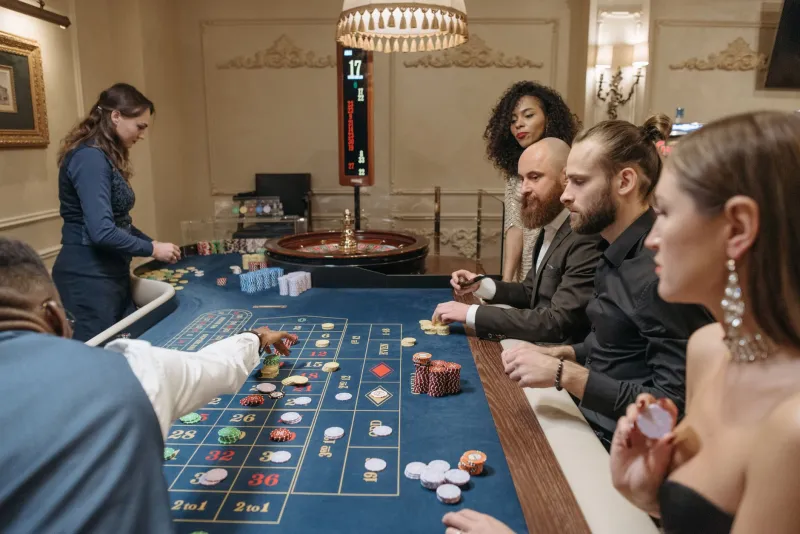
Ask most Australians about their casino memories and they'll tell you about a night out — a group of mates, a few drinks, someone hitting a decent run on the pokies, everyone cheering. There's something genuinely fun about gambling in a social setting. The energy is different. The laughs come easier. The whole thing feels like a shared experience rather than a solitary grind.
But that shared energy has a shadow side. And it's one that doesn't get talked about nearly enough.
When you gamble with other people, you're not just playing against the house. You're navigating a whole layer of social dynamics — peer expectations, group momentum, competitive instincts — that can quietly pull your behaviour in directions you'd never go on your own.
The Round Mentality
Australian social culture is built around reciprocity. You shout a round, your mate shouts the next. It's a deeply ingrained norm, and it extends naturally into gambling settings.
At the pokies, this might look like chipping in together, celebrating each other's wins, or staying on the machines because everyone else is still playing. At the tables, it can mean matching a mate's bet size because backing down feels awkward — even if the amount is well outside what you'd normally stake.
This is social conformity in a context where the financial stakes are real. You're not just ordering another beer. You're potentially adjusting your entire betting behaviour to stay in step with the group.
Research into social gambling consistently finds that people bet larger amounts and play for longer periods when they're in a group than when they're alone. The presence of others doesn't just change the atmosphere — it changes the actual decisions being made.
Competitive Escalation at the Tables
Add a competitive streak — which, let's be honest, describes most Australians at a casino — and things can escalate quickly.
At a blackjack table with mates, there's a subtle but real pressure to match the biggest bet at the table. If your mate throws down $100 and you're sitting on $20 chips, it's hard not to feel like you're being left behind. Nobody says anything. Nobody has to. The social signal is clear enough on its own.
This is called competitive escalation, and it's particularly powerful in environments where status and boldness are admired. Casinos are exactly that kind of environment. Betting big reads as confidence. Pulling back reads as caution — which in a casino setting can feel uncomfortably close to timidity.
The result is that group sessions at the tables often involve bets that none of the individual players would have made independently. Everyone's following everyone else's lead, and the whole group drifts upward together.
The Distraction Factor
Here's something that gets overlooked: gambling well — or at least gambling sensibly — requires a degree of focus. You need to track your spend, notice when you're tilting, and make clear-headed decisions about when to walk away.
All of that becomes significantly harder when you're in a group. Conversations are happening. Someone just won and everyone's reacting. There's another drink in your hand. The session has a social rhythm that's hard to interrupt, even when your own instincts might be telling you to call it a night.
Solo play — particularly online play — doesn't have this problem. There's no social momentum carrying you forward. If you want to stop, you just stop. Nobody looks at you funny. Nobody says 'one more game.' The decision is entirely yours.
In a group setting, quitting early is a social act, not just a financial one. And that makes it much harder to do.
When Someone's Having a Bad Night
Group gambling dynamics don't just affect the people winning or breaking even. They put particular pressure on the person who's down.
If your mate has had a rough run and wants to chase it back, you're suddenly in an uncomfortable position. Do you encourage them to stop? Do you stay and keep them company? Do you quietly step back while they're still at the machine?
This is where the social fabric of a night out can actively work against responsible behaviour. Nobody wants to be the one who kills the vibe or implies their mate has a problem. So the group often stays together, keeps playing, and the person who should probably have walked away half an hour ago keeps going because the social context makes leaving feel impossible.
The Online Difference
It's worth noting that online casino play largely sidesteps these dynamics. When you're on your phone or laptop, there's no group energy pulling you along. Your session length and bet size are genuinely your own choices, not the product of social negotiation.
This doesn't make online play inherently safer — the risks are just different. But it does mean that if you notice your group gambling sessions consistently going longer or costing more than you intended, switching to solo online play might give you a clearer picture of what your actual comfort level looks like without the social noise.
Playing Smart in a Group Setting
None of this means you should stop gambling with your mates. A night out at the casino or the local club is one of life's genuinely good times, and there's real value in shared experiences.
But going in with a few guardrails makes a big difference:
Set your limit before you arrive, not once you're there. When you're already in the thick of it, with a drink in hand and your mates cheering, your budget is much harder to stick to. Lock it in before you walk through the door.
Give yourself permission to step away without a big announcement. You don't owe the group an explanation for managing your own money. A quiet 'I'm done for the night' is enough.
Notice when you're betting to match others rather than because you want to. That's the clearest signal that social dynamics are in the driver's seat instead of you.
Check in with yourself, not the group, when deciding whether to keep going. The question isn't 'is everyone else still playing?' It's 'am I still enjoying this on my own terms?'
The best nights out at the casino are the ones you actually enjoy — not the ones where you look back wondering how you ended up spending three times what you planned.