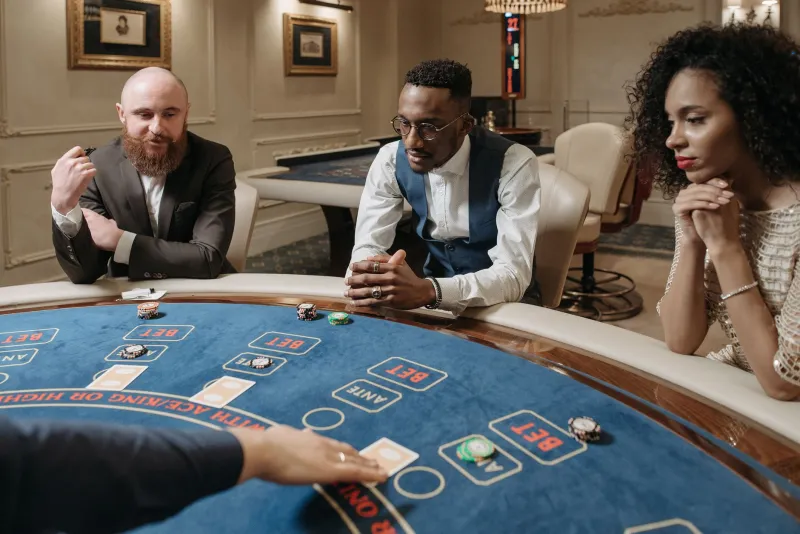
Dealer Streaks, Hot Tables, and Why Your Gut is Lying to You at the Casino
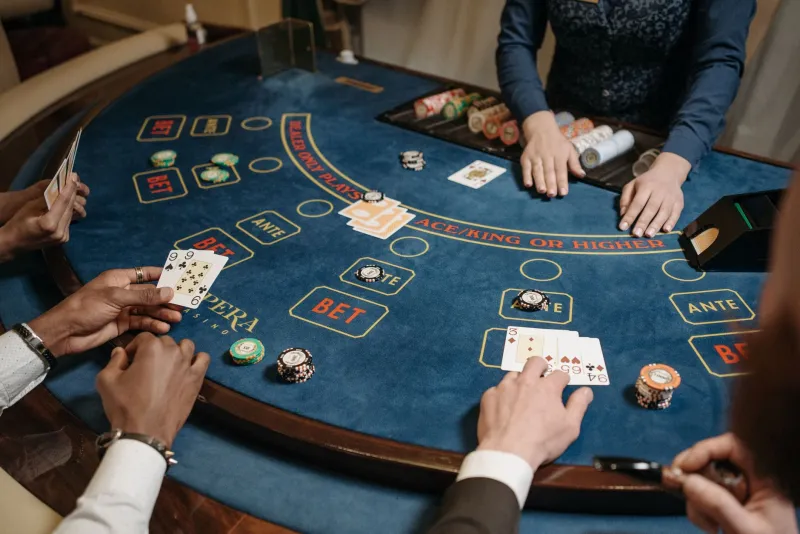
The Scene That Plays Out on Every Casino Floor
It happens in Crown Melbourne, The Star in Sydney, and on every virtual felt at online casinos across Australia. Someone wins a few hands back-to-back. Maybe the dealer busts twice in a row. A small crowd gathers. Someone whispers, 'That table is running hot.' And just like that, half a dozen players are reshuffling their chips and heading over to grab a seat.
It feels logical. It feels like good strategy. It is, unfortunately, neither.
The hot table myth is one of the most persistent beliefs in casino culture — and it's worth pulling apart, because understanding why your brain insists it's real is actually the first step toward playing smarter.
What 'Running Hot' Actually Means (and Doesn't)
When players talk about a hot table or a hot dealer, they usually mean one of two things: either the dealer has been busting frequently, or players at that table have been winning more than losing over a short stretch. Both observations are real. The conclusion drawn from them — that the trend will continue — is where things go sideways.
Every hand of blackjack, every spin of roulette, every roll of the dice is what mathematicians call an independent event. What happened in the last five minutes has zero bearing on what happens in the next five. The cards don't have memory. The roulette wheel doesn't know it just landed on red four times. The dice are not keeping score.
The house edge at any given table doesn't shift because of recent results. At a standard Australian blackjack table played with basic strategy, the house holds roughly a 0.5% edge. That number doesn't budge because the dealer happened to bust three times in a row before you sat down.
Your Brain Is Genuinely Trying to Help You (It's Just Wrong)
Here's the thing — the impulse to find patterns isn't stupidity. It's actually one of the most deeply wired features of the human brain. Pattern recognition kept our ancestors alive. Spotting that predators tended to appear near certain watering holes at dusk was genuinely useful survival information.
The problem is that this same mental machinery gets applied indiscriminately — including to situations that are genuinely, mathematically random.
Psychologists call the tendency to perceive meaningful patterns in random data apophenia. A closely related concept is the clustering illusion — the expectation that random sequences should look evenly distributed, when in reality, genuine randomness produces clumps, streaks, and runs all the time. Flip a coin 100 times and you'll almost certainly see stretches of five or six heads in a row. That's not a pattern. That's just what randomness looks like.
When a dealer busts four hands in a row, your brain files that away as significant data. It is not significant data. It is a normal statistical fluctuation that would be expected to occur regularly over a long enough sample.
Confirmation Bias Does the Rest
Once your brain has latched onto the idea that a table is running hot, confirmation bias kicks in to reinforce it. You notice and remember the wins that follow your decision to sit down. You discount or quickly forget the losses. Every time you win a hand, it confirms the theory. Every time you lose, it's just a temporary blip in the hot streak.
This is why the hot table myth is so sticky. It generates its own evidence — not because the table is actually hot, but because you're selectively cataloguing outcomes to support a conclusion you've already reached.
There's also a social dimension to this on Aussie casino floors. When a group of players is winning and visibly celebrating, it creates an atmosphere. There's energy at the table. That energy is real — but it has no causal relationship to future card outcomes. You're responding to the vibe, not to genuine statistical information.
The Dealer Factor: Are Some Dealers Actually Easier to Beat?
This one gets a bit more nuanced. Some players swear that certain dealers bust more frequently than others — and occasionally, there's a sliver of truth buried in there, just not in the way most people think.
In live table games, a dealer who consistently shows their hole card by accident (known as a flashing dealer) does technically give players an edge. Similarly, in physical casinos, dealer tells — subtle unconscious behaviours — can theoretically provide information. These are real phenomena that professional advantage players have exploited.
But here's the reality check: the average recreational player sitting down at a table because they watched someone win three hands is not identifying dealer tells. They're pattern-matching on noise. The dealer who 'seems to bust a lot' has simply had a normal statistical run that your brain has elevated to meaningful signal.
At online casinos — including the RNG-based table games you'll find here at AU Casiny — the dealer is a software simulation. There are no tells, no flashing hole cards, and no hot streaks. Every hand is generated by a certified random number generator. The concept of a hot online dealer is entirely fictional.
What Actually Matters When You Pick a Table
None of this means all tables are created equal. There are legitimate, mathematically sound reasons to choose one table over another — they just have nothing to do with recent results.
Rules variations matter. A blackjack table that pays 3:2 on naturals is meaningfully better than one paying 6:5. That's not a streak — that's a structural difference that affects your expected return on every single hand.
Number of decks matters. Single-deck blackjack offers better odds than an eight-deck shoe, all else being equal. Check the table rules before you sit, not who just won the last hand.
Minimum bets matter for your bankroll. Sitting at a $50 minimum table when your session budget is $200 is a fast way to have a very short night, regardless of whether the table is 'hot' or not.
Table atmosphere matters for enjoyment. If you want a relaxed pace or a lively game, pick accordingly. Just don't confuse social preference with strategic edge.
Breaking the Habit
Knowing the psychology doesn't make you immune to it — that's worth acknowledging. Even players who fully understand independent probability still feel the pull toward a table where things seem to be going well. The instinct is automatic.
What you can do is build a small pause into your decision-making. Before you move tables, ask yourself: Am I moving because the rules or conditions are better, or because I just watched someone win a few hands? That question alone won't make you a perfect rational agent, but it'll catch a lot of expensive impulse decisions before they happen.
The maths doesn't care about momentum. The next hand is always a fresh start — for the house and for you.
The Bottom Line
Hot tables aren't a thing. Hot dealers aren't a thing. They're a compelling story your brain tells you about random data, reinforced by selective memory and social atmosphere. The casino floor is genuinely exciting, and there's nothing wrong with enjoying the energy of a table where people are winning — just don't mistake that energy for a predictive signal.
Pick your table based on rules, limits, and your own comfort. Leave the streak-chasing to the gamblers who haven't read this far.