The High-Roller Trap: How VIP Casino Programs Are Engineered to Take More From the Players Who Can Least Afford to Lose It
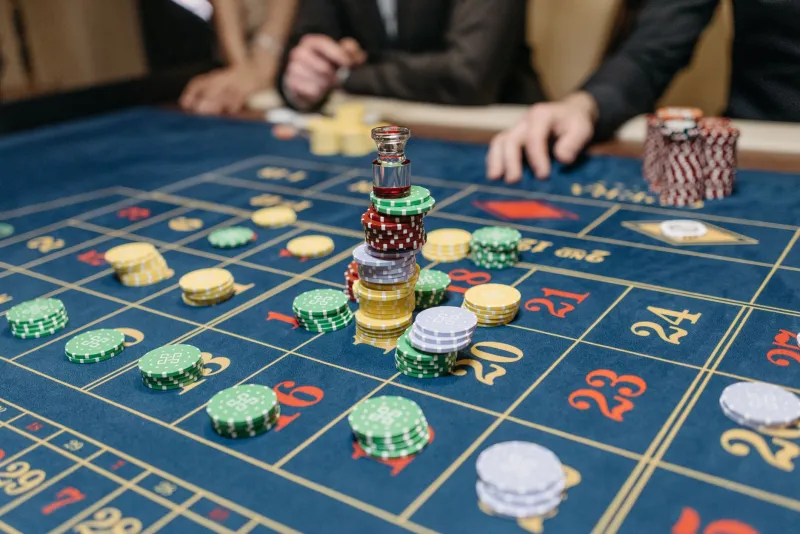
There's a particular feeling that comes with being recognised as a VIP at a casino. Someone knows your name. Your drinks arrive without asking. A host materialises at your elbow to offer you a suite upgrade or front-row tickets to a show. It feels like belonging somewhere exclusive — like you've earned something.
That feeling is a product. And it's one of the most expensive things you'll ever consume.
Australia has a complicated relationship with high-roller gambling. Crown Melbourne and The Star in Sydney have both faced intense regulatory scrutiny over how they treated their biggest-spending customers. Senate inquiries, royal commission-style investigations, and damning internal documents have all pointed to the same uncomfortable truth: the more a casino values you as a VIP, the more systematically it's working to extract money from you.
This isn't cynicism. It's arithmetic.
What a VIP Program Actually Is (And What It Isn't)
Most players understand loyalty programs in the general sense — spend money, earn points, redeem rewards. It feels transactional and relatively fair. VIP programs, though, operate on a fundamentally different logic.
At the upper tiers, the casino isn't rewarding your loyalty. It's managing your behaviour. Every complimentary experience — the hotel room, the fine dining, the private gaming lounge — is calculated against your expected theoretical loss. Casinos use a metric called "theoretical win" to model exactly how much they expect to take from you based on your average bet size, game selection, and hours played. Your VIP perks are budgeted as a percentage of that figure.
In other words: the casino already knows, statistically, how much you're going to lose. Your free steak dinner is line-itemed against your projected losses before you've even sat down.
The Escalation Problem
Here's where VIP programs become genuinely dangerous for the players inside them.
To maintain or advance through VIP tiers, players typically need to hit minimum turnover thresholds — sometimes monthly, sometimes quarterly. At the lower end of high-roller status, that might mean wagering $50,000 in a month. At the upper end, the figures become genuinely staggering.
This creates a structural incentive to gamble more than you otherwise would. Not because you want to. Not because you're chasing losses. But because the system has established a benchmark, and your brain — wired for status and completion — doesn't want to fall short of it.
Casino hosts, particularly in Australia's international VIP markets, have historically been trained to identify when a player is close to a tier threshold and nudge them across it. A quiet word about how close they are to their next status review. An offer of extended credit. An invitation to a private table where the minimum bets are conveniently higher.
The Crown Resorts inquiries in Victoria and New South Wales surfaced internal documents describing exactly this kind of behaviour — hosts actively managing players toward higher spend, not lower risk.
The Maths Nobody Shows You
Let's talk about what VIP status actually does to your expected losses.
Suppose you're a regular player who bets $50 a hand at blackjack. With basic strategy, the house edge is roughly 0.5%. Over a long session, that's manageable — you might be down a few hundred dollars, enjoy a night out, and call it entertainment.
Now suppose VIP status has nudged your average bet to $500 a hand. The house edge hasn't changed. But your expected hourly loss has increased tenfold. If you're playing 60 hands an hour, you're now looking at an expected loss of around $150 per hour on blackjack — one of the most player-friendly games in the house. On pokies or baccarat, where edges are steeper, the numbers get uglier fast.
The perks don't offset this. A $400 dinner and a $300 hotel room sound generous until you realise they're being offered to someone losing $1,500 an hour. The casino is still keeping the overwhelming majority of your theoretical loss. The comp is a rounding error dressed up as generosity.
Real Stories from the Australian Market
The Australian high-roller market — particularly the international junket trade that Crown and The Star aggressively courted through the 2010s — produced some genuinely harrowing case studies.
Inquiry documents revealed players who lost millions across single visits, with casino credit extended repeatedly despite obvious signs of problem gambling. VIP hosts, paid partly on commission based on player losses, had direct financial incentives to keep players in their seats and at the tables.
One pattern that emerged repeatedly: players who attempted to self-exclude or set limits found those limits quietly undermined by host relationships. When your personal casino contact is texting you about a special event or a suite that's been held in your name, the psychological barrier to staying away becomes much harder to maintain.
This isn't ancient history. The regulatory reforms that followed — new suitability requirements, enhanced responsible gambling obligations, restrictions on junket operators — were direct responses to documented harm at the VIP level.
The Online Equivalent
For Australian players using online casinos, the VIP dynamic plays out differently but follows the same underlying logic.
Online VIP programs typically offer higher deposit bonuses, faster withdrawal processing, dedicated account managers, and cashback on losses. That last one is particularly worth scrutinising. Cashback sounds like protection — and a small percentage returned on losses does soften the blow. But it also functions as an incentive to keep playing after a losing session, because "you'll get some of it back."
Account managers at online casinos, much like their land-based counterparts, can be a double-edged contact. A good one genuinely helps you navigate the platform and understand your options. A poorly incentivised one might be in touch suspiciously often around the times you've had big losing sessions, dangling reload bonuses at exactly the moment your judgment is most compromised.
Knowing the difference matters. At AU Casiny, we'd always encourage players to treat account manager contact with the same healthy scepticism they'd apply to any sales relationship — friendly, potentially useful, but not disinterested.
What Genuine Player Protection Looks Like
If you're a higher-stakes player, none of this means you can't enjoy premium casino experiences. It means going in with clear eyes.
A few practical anchors:
Set your thresholds before the host sets them for you. Decide what tier you're comfortable maintaining — or decide you don't care about tiers at all — before the status pressure kicks in.
Evaluate perks at face value, not face value plus flattery. A comp is worth what it's worth, not what it makes you feel. A $200 dinner is a $200 dinner whether it comes with a handshake from a VIP host or a self-service voucher.
Watch your bet size, not your tier level. The most reliable indicator of how a casino session is going isn't your status badge — it's whether your individual bets are creeping upward as the session continues.
Use platform tools, not host relationships, as your safety net. Deposit limits, session limits, and loss limits on licensed platforms exist independently of any personal relationship. They're harder to override in a moment of poor judgment.
The Uncomfortable Bottom Line
VIP status at a casino is a carefully constructed experience designed to make high-spending players feel valued, seen, and reluctant to leave. The feeling is real. The reciprocity isn't.
The players who benefit most from VIP programs are, paradoxically, those who engage with them least emotionally — who treat the perks as incidental bonuses rather than relationships to maintain or status to protect.
The ones who lose most aren't always the ones betting the biggest amounts. They're often the ones who've started to believe the casino genuinely has their interests at heart.
It doesn't. But knowing that is half the battle.